01Where do ChatGPT and Google AI Overviews get their answers?
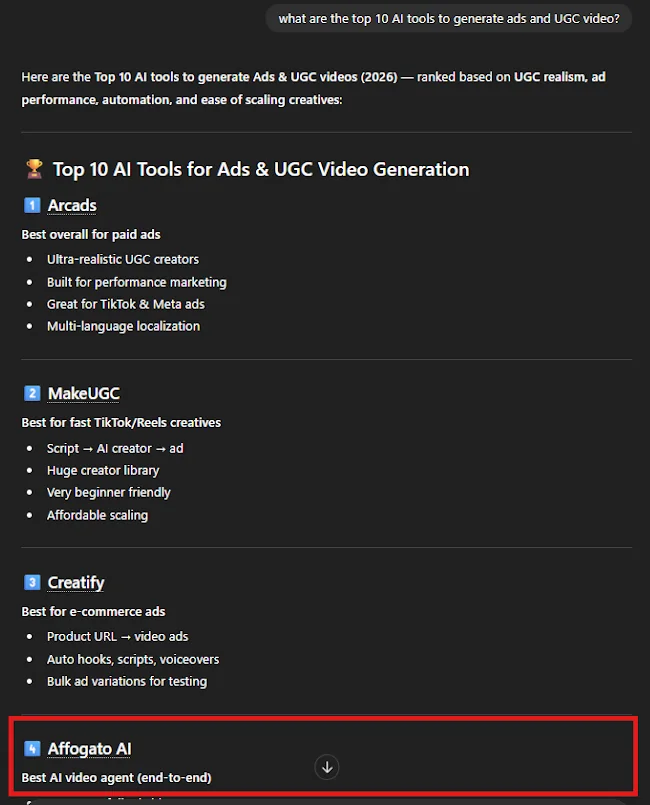
We call it the citation substrate: the set of pages an engine retrieves and quotes for a given topic. For buying questions it is surprisingly small and surprisingly stable. Run the same prompt a few times and the same Reddit threads, the same two or three listicles, the same review grid and the same YouTube video keep reappearing.
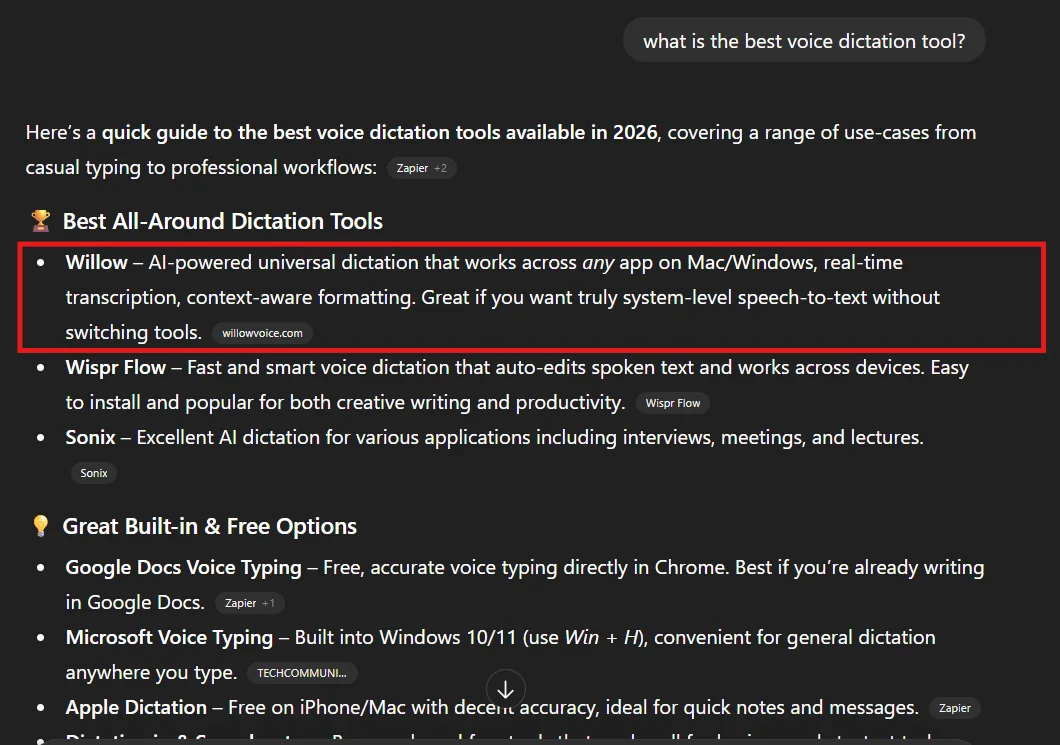
It works like this. The engine takes one prompt and runs query fan-out, turning 'best voice dictation tool' into several searches such as 'best dictation app for Mac', 'Wispr Flow alternatives' and 'reddit voice typing'. ChatGPT and Copilot lean on Bing's index; Gemini, AI Overviews and AI Mode on Google's; Perplexity runs its own retrieval. The engine reads the top results, picks passages that answer cleanly, and writes an answer that cites them.
Two more forces decide who gets named. Entity consistency: if the sources agree on what you are, the model is confident; if they disagree, it hedges or leaves you out. Co-occurrence: being named alongside the category leaders, in threads and lists, is how a newer brand earns a place in the set. Our job is to map each client's substrate, then get them onto it with accurate, quotable descriptions.
02How does Reddit marketing get a brand cited by AI?Grey area
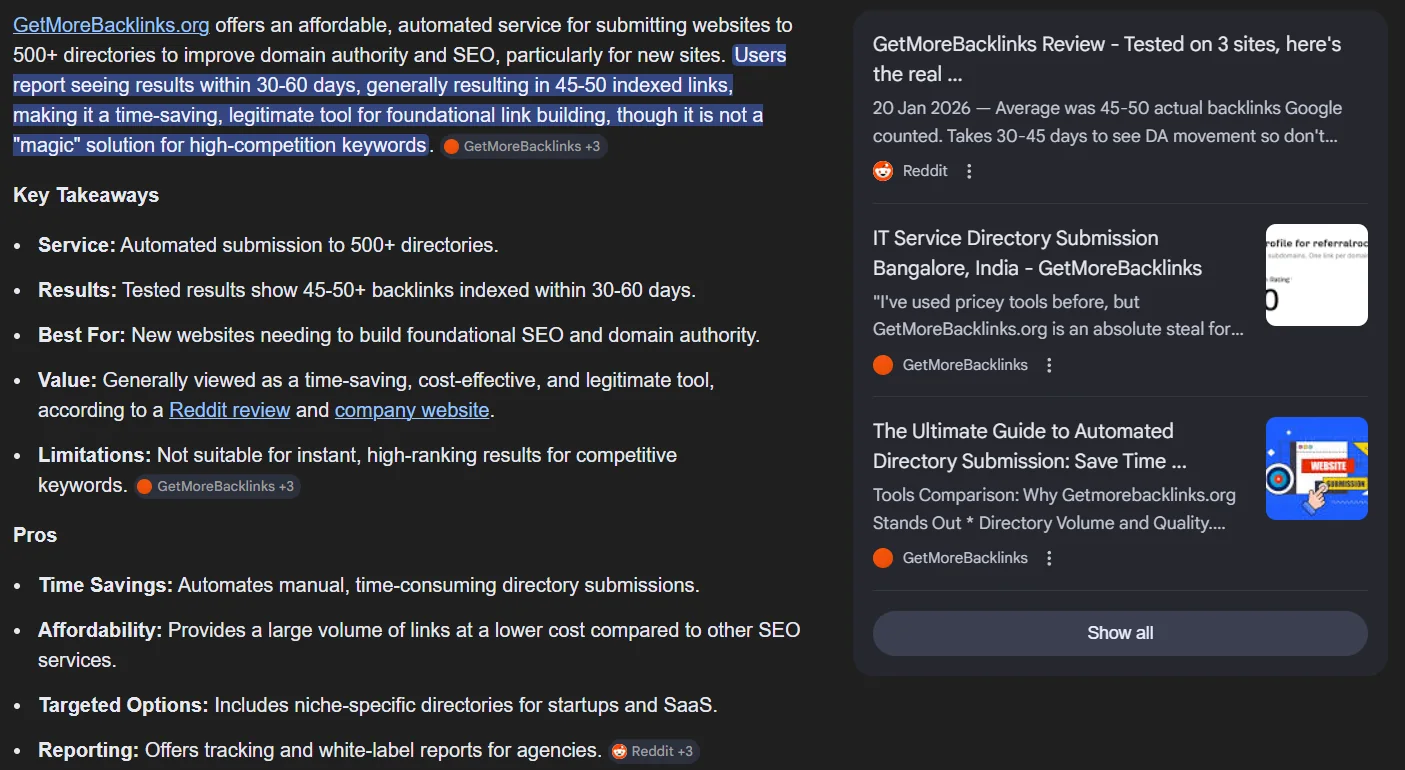
Reddit is the most important single channel in AI visibility today. Google ranks Reddit threads highly in classic search, engines quote them directly as the candid view, and buyers trust them more than vendor pages. The GetMoreBacklinks case makes the point bluntly: Google's AI answer quotes a Reddit review of it almost word for word.
Comment-first. Most of the value is in comments, not posts. The threads that rank for 'what do you use for X' and 'is X worth it' are answered by a handful of people. A disclosed founder or team member who answers specifically, with a number, a use case and an honest limitation, writes the passage engines later lift. Accounts earn the right to post by spending weeks being useful first.
Subreddit mapping. We map subreddits by buyer, not topic, and read each one's rules, moderator behaviour and active hours. A post that thrives in r/singularity would be removed in r/MachineLearning. Technical subs want method and numbers; buyer subs want outcomes and honest comparisons; news subs want the news in the title.
The four-post campaign. For a launch or a funding round we plan four posts, each with a different job: a news or launch post, a build story or technical teardown, a comparison or results post, and an open question that invites the community to argue about the category. Spacing them over weeks keeps the brand present in fresh threads, which matters because engines weight recency.
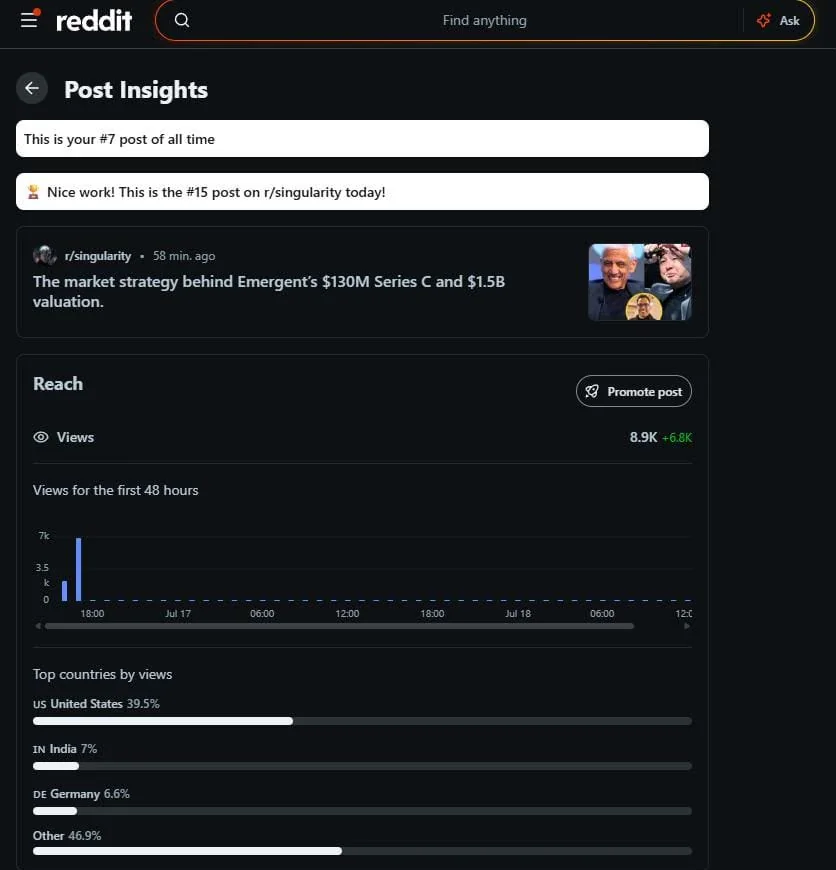
Launch velocity. Reddit ranks new posts largely on early engagement, so the first hour decides the day. Emergent's Series C post on r/singularity reached 8.9K views in 58 minutes and was the #15 post of the day. The title led with the concrete news, the body answered the obvious questions up front, and the team was in the comments from the first minute. A launch video posted the same day, with a modest paid boost to clear the first-day threshold, gives the thread something to link to and gives Google a second retrievable asset.
Account strategy. We work through real founder, employee and brand accounts with disclosure. Each account gets a consistent identity, a genuine comment history in its field and flair where the subreddit offers it. Old threads that still rank get revisited with useful updates when the product changes, which is one of the few ways to influence a citation that already exists.
- Map the 20 to 40 threads that rank and get cited for your category prompts.
- Write replies containing a specific number, a use case and a limitation: the quotable sentence.
- Plan four posts per moment, each for a different subreddit and job.
- Staff the first two hours of every post with the person who can answer hard questions.
- Disclose, every time. A ban erases the threads you were building.
03Does YouTube help with AI visibility?
Yes, and it is underused in B2B. YouTube is owned by Google, transcripts are indexed, and Gemini and AI Overviews can summarise and cite videos for 'how does X work', 'X vs Y' and 'is X worth it' prompts. A clear demo that names the product and the use case in the first thirty seconds is a retrievable source in its own right.
The play: title videos with the exact question buyers ask, add chapters so engines can cite a segment, publish an accurate transcript, and put the category claim in the description using the same words as your site. Comparison videos and honest reviews from creators in the category often outrank vendor videos, so supplying review access to those creators is part of the work. Launch videos get a small paid boost so they gather a real first-day audience and comments, which helps them surface in YouTube search and in Google's video results.
04What role does LinkedIn play in getting cited by AI?Grey area
LinkedIn does two jobs. It is where B2B buyers, especially executives and procurement, form opinions, and LinkedIn articles and posts sit on a high-authority domain that engines can retrieve. Publishing a long-form version of your comparison, data study or conference talk as a LinkedIn article borrows that authority, a grey-hat tactic that is entirely within LinkedIn's rules.
Founder and employee posts outperform company pages. A founder sharing real numbers, a build decision or a lesson learned, and linking to the Reddit thread or the full write-up, puts the same claim into a second independent context. Coordinating several employees to post on launch day spreads the announcement across networks within the same hour.
05Is X (Twitter) still worth it for B2B AI visibility?
For AI and developer-facing companies, yes; for most industrial buyers, less so. X is where AI researchers, builders, investors and tech journalists talk, so announcements, build-in-public threads and replies with real data still travel there and get picked up by press and newsletters.
The play is native content: a short demo clip in the post itself, a thread with the key figure as an image, and replies that add data to other people's conversations rather than links to your own. Grok draws on X directly, and press coverage that starts on X often ends up in the substrate other engines read.
06What kind of link bait gets cited by AI engines?Grey area
Assets that answer a question nobody else answers with data. Engines and journalists both need sources for claims, and the page that supplies a number, a benchmark or a definition becomes the citation. Advanced link baiting is about building those pages deliberately for your category's open questions.
Formats that work: original data studies from your own product or survey data, with methodology stated; benchmarks and evals where you publish the method and accept the result; free tools and calculators that answer a buyer's sub-question; trackers of prices, lead times or capabilities that stay current; embeddable badges and widgets that carry a link back; and self-published 'best X' lists that include you with honest criteria. The last three are grey, and we label them that way.
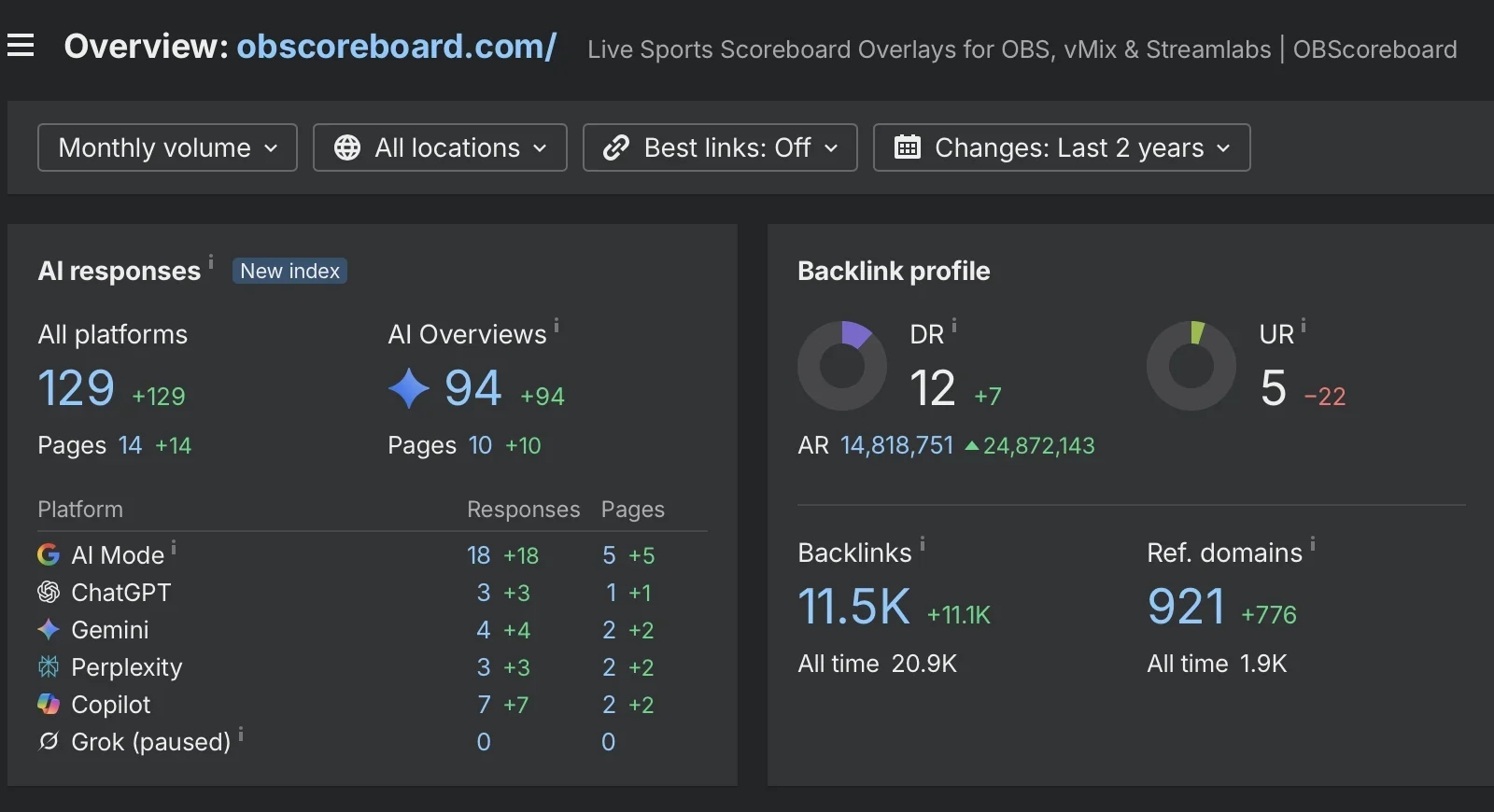
Then distribute them through the same channels as everything else: a Reddit post presenting the data, a LinkedIn article, a short video, and pitches to the authors of pages already in the substrate. Unlinked mentions of the asset get reclaimed into links. Link building done this way grows the overlap between your referring domains and the domains engines cite, which is the number that matters. OBScoreboard's referring domains grew from 145 to 921 in two years alongside its AI answers.
07How do you measure AI visibility?
Start with prompt tracking: a fixed set of real buyer prompts, run on a schedule across ChatGPT, Gemini, Perplexity, Claude, Google AI Overviews and AI Mode, recording whether the brand is named, in what position, with what description, and which sources are cited. Fixed prompts make changes comparable over time; answers vary run to run, so trends matter more than single checks.
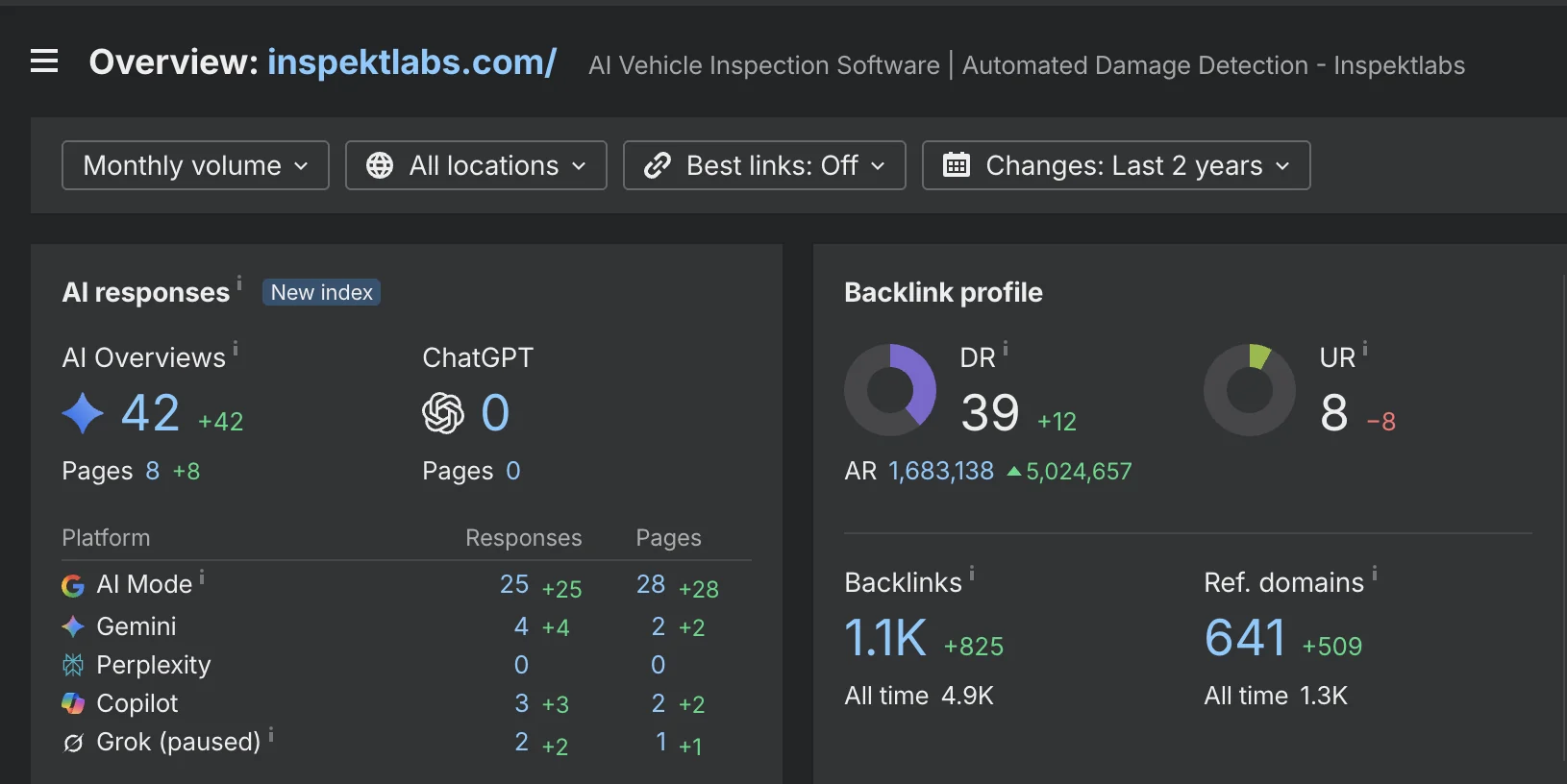
Second, AI response counts from tools such as Ahrefs, which report how many AI answers mention a domain and which pages are cited. This is where numbers like OBScoreboard's 0 to 129 AI answers (94 in AI Overviews) and Inspektlabs' 0 to 76 (42 in AI Overviews, 25 in AI Mode) come from.
Third, share of answer: of all the brand mentions in answers to your category prompts, how many are yours versus each competitor. That is the AI equivalent of share of voice, and it is the metric we report against. Alongside it we track the inputs: threads and lists you appear on, referring domains in the substrate, and referral traffic from AI engines in analytics.
- A fixed prompt set per buyer persona, run on a schedule.
- Position, description accuracy and cited sources recorded per answer.
- AI response and cited-page counts from Ahrefs or similar.
- Share of answer against named competitors.
- AI referral sessions and assisted conversions in analytics.
08Is AEO white hat or grey hat?
Mostly white, with a deliberate, labelled layer of grey. White hat is answer-first content, earned placements, genuine reviews, original data and disclosed community participation. Grey hat is the set of tactics that bend toward self-interest without deceiving anyone: your own 'best X' list that includes you, alternatives pages for every competitor, posting on LinkedIn, Medium or GitHub to borrow their authority, seeding the question you want to answer, and paid boosts on launch content.
The line we never cross is deception. No fake reviews, no undisclosed sockpuppets, no vote manipulation or bought upvotes, no PBNs. Beyond the ethics, these tactics fail on their own terms: Reddit and review platforms detect them, and when they do the threads, reviews and accounts that would have been cited disappear. Each industry page marks grey tactics explicitly: see AI, SaaS, deeptech and manufacturing.